British Columbia is home to some of the most dramatic landscapes in North America, and the architecture here has evolved to match. Two design styles dominate the custom home conversation in this province: mountain modern and west coast contemporary. Both are rooted in a respect for nature and a desire to bring the outdoors in, but they take very different paths to get there.
If you are planning a custom build in BC and trying to decide which direction to take, understanding what defines each style, and where each one shines, will help you make a more confident decision.
What Defines Mountain Modern
Mountain modern is a style that draws directly from the alpine environments where it is most often built. It takes the bones of traditional mountain lodge architecture, heavy timber, natural stone, steeply pitched rooflines, and strips away the ornamental excess, replacing it with clean geometry and contemporary finishes.
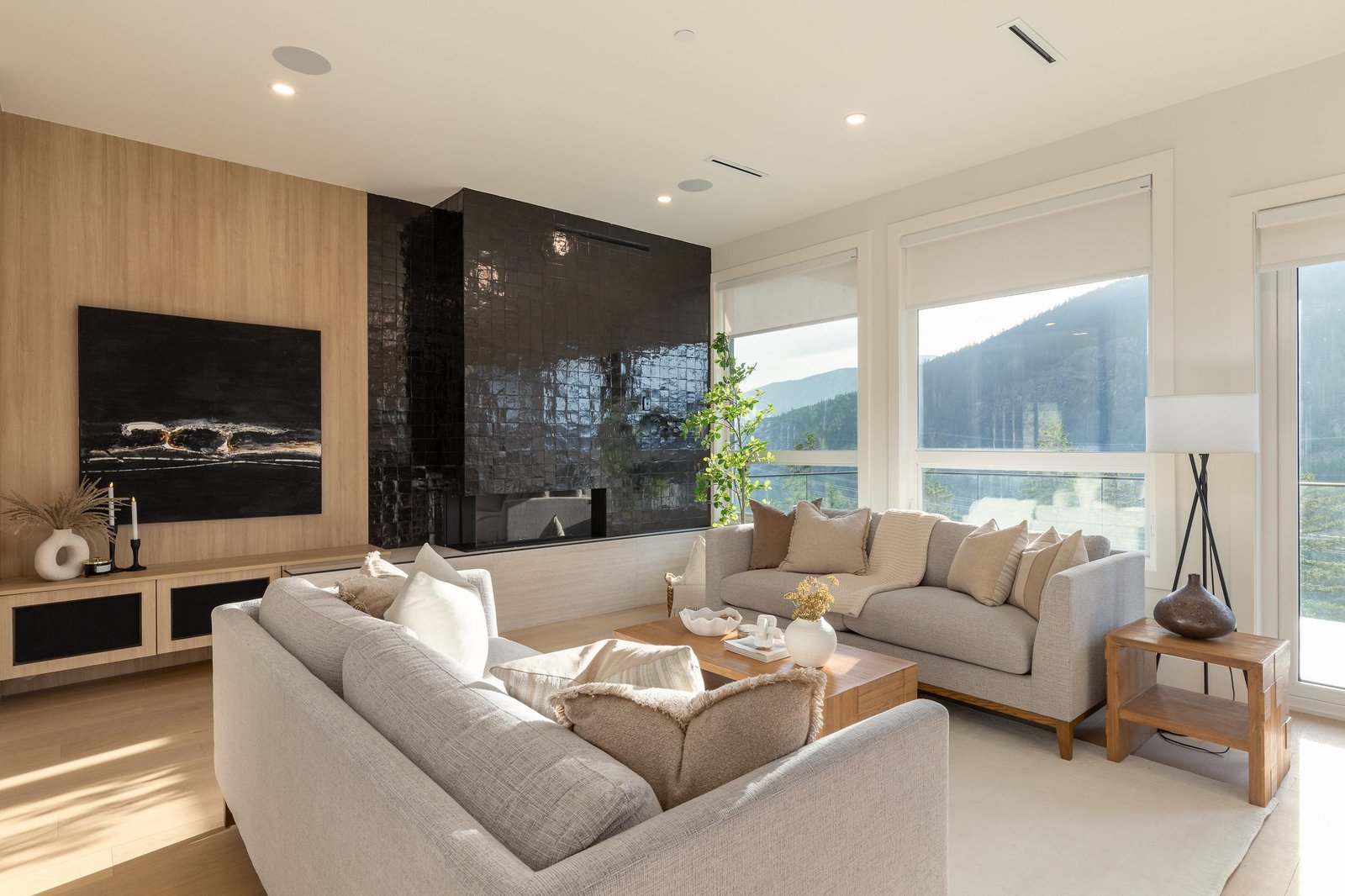
The material palette is grounded and tactile. Exposed Douglas fir beams, stacked stone feature walls, board-formed concrete, and dark metal cladding are all hallmarks of the style. Interiors tend to feel warm and enveloping, with rich wood tones, textured surfaces, and layered lighting that creates a sense of shelter against the elements outside.
Rooflines in mountain modern homes are often steep and angular, designed both for heavy snow loads and to echo the peaks that surround them. Windows are generous but intentionally framed, large picture windows that capture a specific view rather than dissolving the entire wall into glass.
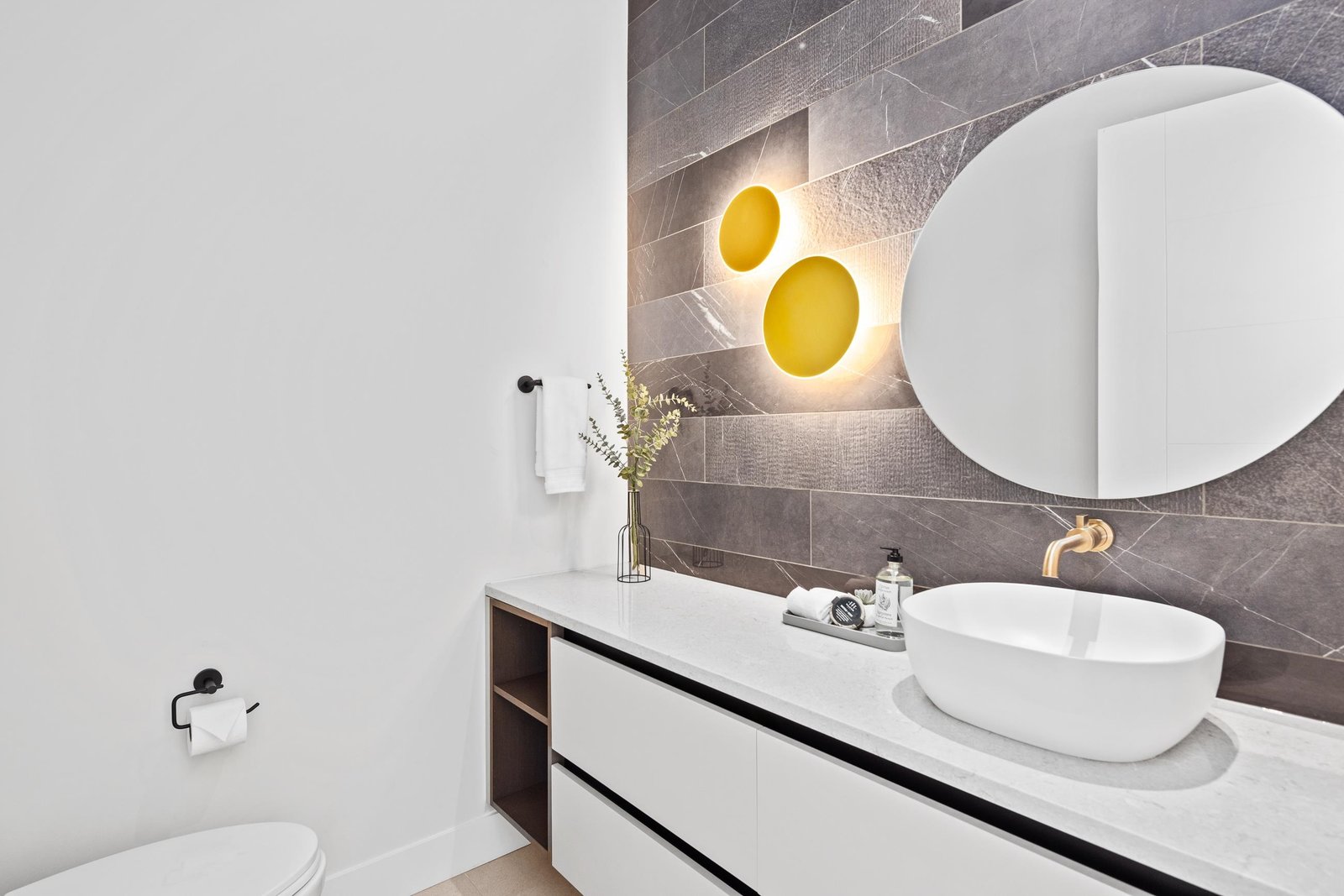
What Defines West Coast Contemporary
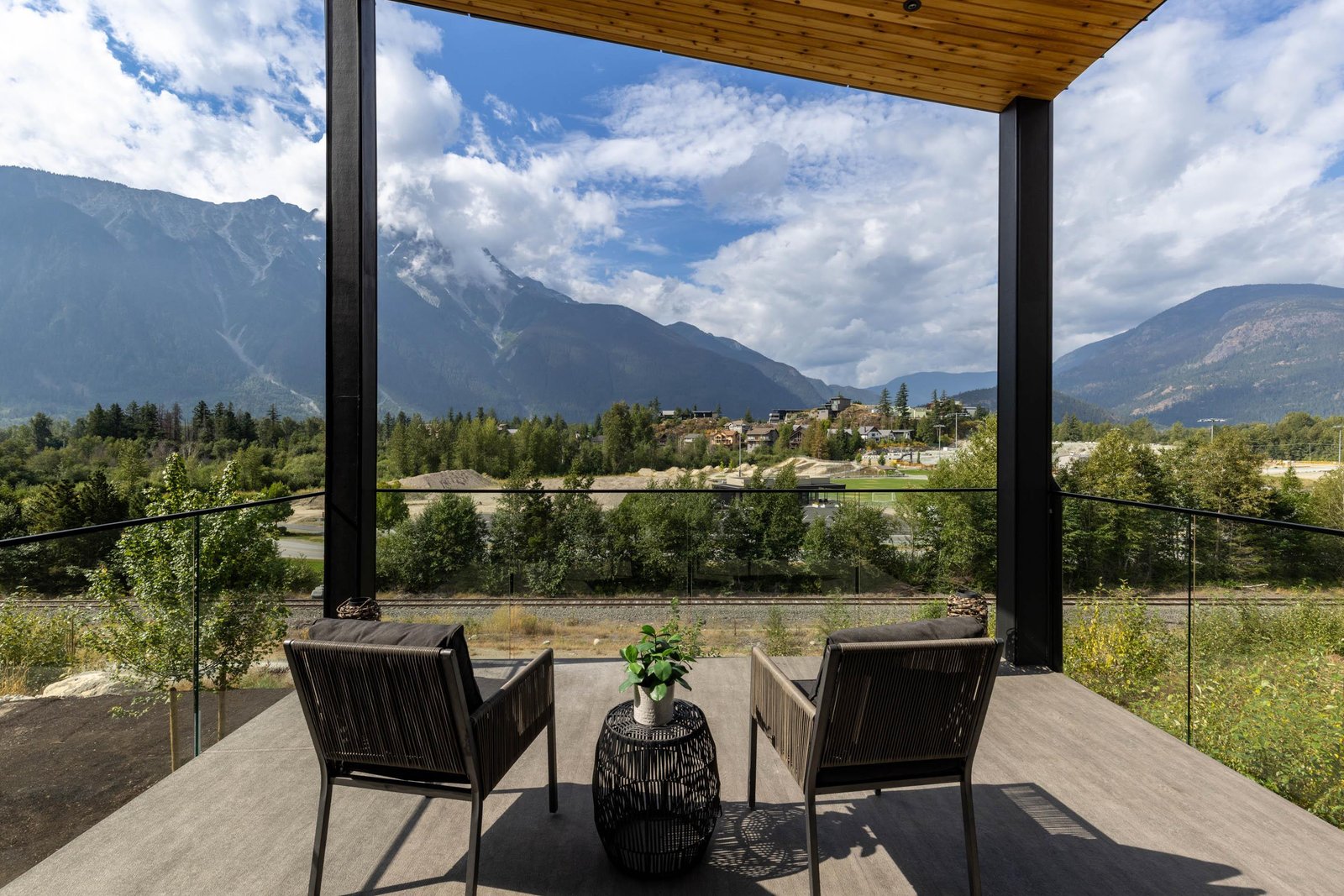
West coast contemporary takes a lighter, more open approach. Born from the temperate rainforest climate and coastal topography of BC's lower mainland and island regions, this style prioritises transparency, connection, and a seamless flow between interior and exterior spaces.
The defining feature is glass, expansive walls of floor-to-ceiling windows and sliding door systems that open entire living areas to covered outdoor spaces. The structural palette leans toward lighter woods like western red cedar, combined with concrete, steel, and white or neutral-toned interiors that let natural light do the heavy lifting.
Rooflines tend to be flat or gently sloped, often with deep overhangs that provide rain protection while maintaining sight lines. The overall feeling is airy, minimal, and horizontal, with open-plan layouts that emphasise a relaxed, indoor-outdoor lifestyle.
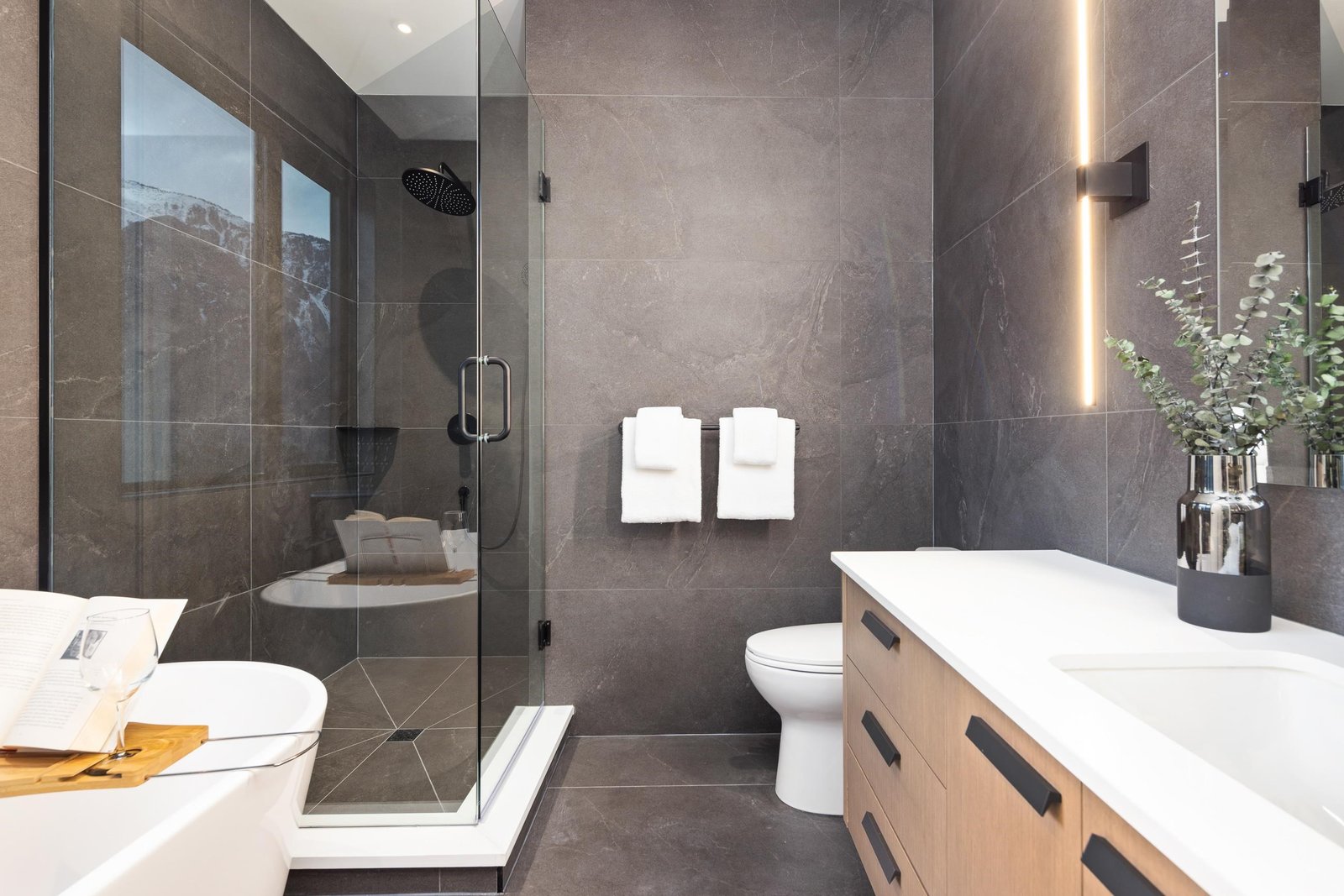
Key Differences: Materials, Feel, and Landscape
While both styles celebrate natural materials and strong connections to the surrounding environment, they differ in tone and intention. Mountain modern is about warmth, weight, and rootedness. West coast contemporary is about openness, lightness, and dissolving the boundary between inside and out.
- Materials: Mountain modern favours dark stone, heavy timber, and metal. West coast contemporary leans toward cedar, concrete, steel, and glass.
- Colour palette: Mountain modern interiors tend to be warmer, deep browns, charcoals, and earth tones. West coast contemporary uses whites, greys, and natural wood tones for a brighter, airier feel.
- Rooflines: Steep and angular versus flat or low-slope with deep overhangs.
- Relationship to landscape: Mountain modern homes sit within the terrain, grounded by mass and material. West coast contemporary homes float above it, framing views through transparency.
- Interior atmosphere: One feels like a refined lodge. The other feels like a gallery with the forest as the art.
Which Style Suits Which Region
Geography plays a significant role in which style feels right. In BC's Sea-to-Sky corridor, Whistler, Pemberton, Squamish, mountain modern is the natural choice. The steep terrain, heavy snowfall, and alpine setting call for the anchored, sheltered character that this style delivers. Homes here need to handle serious snow loads, and the bold materiality of mountain modern is a practical as well as aesthetic fit.
Along the Sunshine Coast, on Vancouver Island, and throughout the lower mainland, west coast contemporary is in its element. The milder climate allows for those expansive glass walls and open-air living spaces without the engineering challenges that come with extreme weather. The lush coastal forests and ocean views reward the transparency and lightness of this approach.
In BC's interior, the Okanagan, the Kootenays, there is genuine room for either style, or even a thoughtful blend. The dry climate and dramatic lake-and-mountain landscapes can support both the warmth of mountain modern and the openness of west coast contemporary, depending on the specific site and the homeowner's vision.
Great architecture does not impose a style on the land, it listens to the site and responds. The best homes in BC feel inevitable, as though they could not have been built anywhere else.
How Ravello Approaches Both Styles
At Ravello Developments, we do not subscribe to a single aesthetic. We have built homes across the mountain modern and west coast contemporary spectrum, and many that borrow thoughtfully from both. What guides every project is the site itself, the orientation, the views, the climate, and the way our clients want to live in the space.
Our design process begins with the land, not a catalogue. We work with architects and designers who understand that a home in Whistler demands different thinking than a home on the Sunshine Coast, even if both clients want open plans and natural materials. The details, the roof pitch, the glass-to-wall ratio, the species of timber, the weight of the stone, all flow from that site-first approach.
Whether you are drawn to the grounded warmth of mountain modern or the luminous openness of west coast contemporary, we can help you shape a home that fits both the landscape and the way you live. Browse our portfolio to see how these styles come to life across BC, or get in touch to start a conversation about your project.